
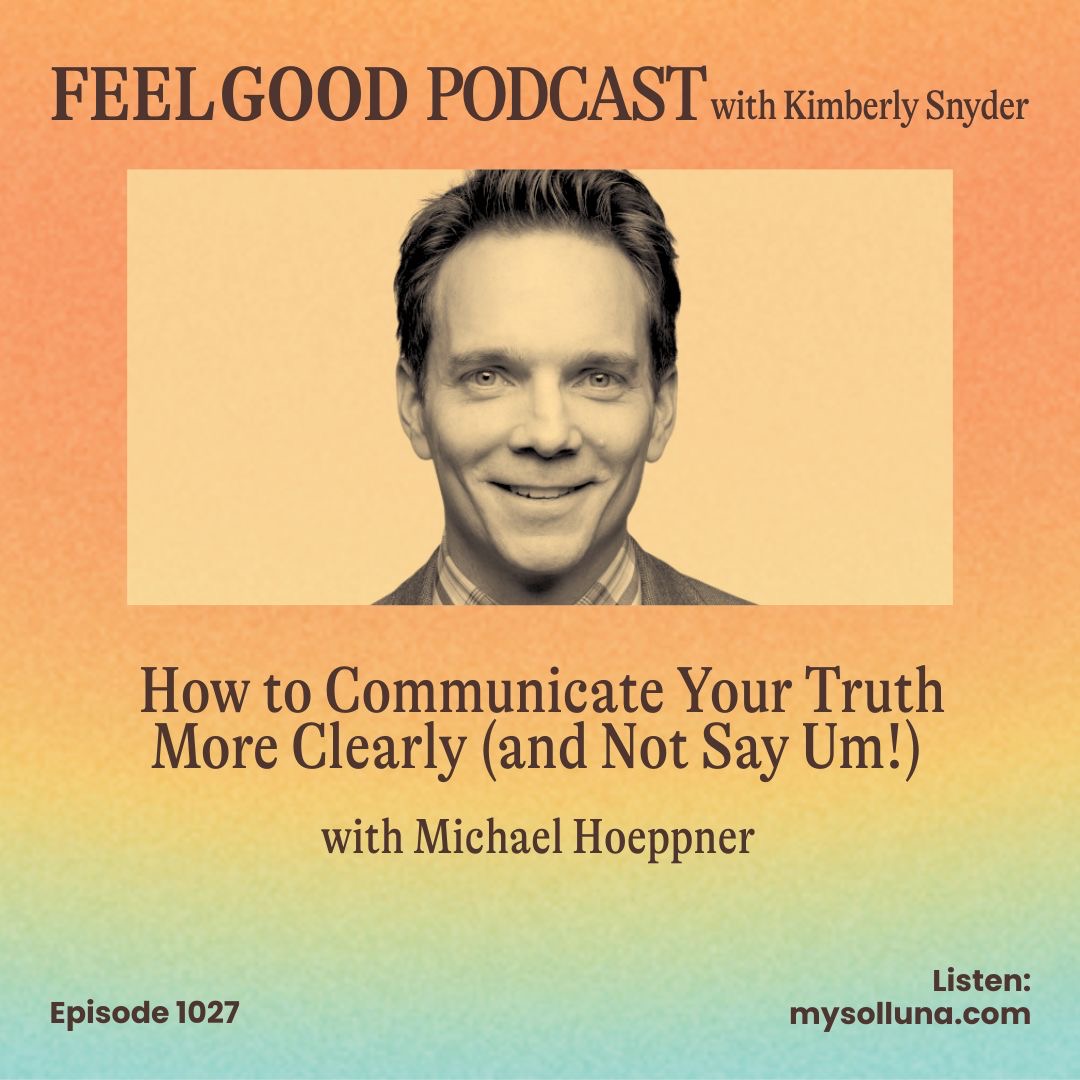
Episode Summary:
In this conversation, Kimberly and Michael Hoeppner discuss the concept of the ‘confidence trap’ in communication, emphasizing that confidence can be fleeting and often leads to self-critique. He advocates for focusing on communication behaviors rather than chasing confidence, suggesting that this approach can lead to more effective speaking and personal development.
About Michael Hoeppner
Michael Hoeppner is the Founder and CEO of GK Training, a firm dedicated to giving individuals, companies, and organizations the communication skills to reach their highest goals in work and life. He has worked with some of the world’s most influential companies and leaders, across a wide range of industries, universities, and professional sectors. His corporate clients include: three of the top eight financial firms in the world, 45 of the AmLaw 100, and multinational tech, pharma, and food and beverage companies. He teaches his unique approach to communication at Columbia Business School, in both the MBA and PhD programs.
Resources:
Website: michaelchadhoeppner.com
Book: Don’t Say Um: How to Communicate Effectively to Live a Better Life
Company: GK Training
Episode Sponsors
FATTY15
OFFER: Fatty15 is on a mission to replenish your C15 levels and restore your long-term health. You can get an additional 15% off their 90-day subscription Starter Kit by going to fatty15.com/KIMBERLY and using code KIMBERLY at checkout.
USE LINK: fatty15.com/KIMBERLY
SBO PROBIOTICS
OFFER: Go to mysolluna.com and use the CODE: PODFAM15 for 15% off your entire order.
USE LINK: mysolluna.com CODE: PODFAM15 for 15% off your entire order.
Episode Chapters
00:00 The Importance of Communication
00:16 The Spiritual Aspect of Communication
00:49 Exploring Vocal Variety
SOLLUNA PRODUCT LINKS
- Glowing Greens Powder™
- Feel Good SBO Probiotics
- Feel Good Detoxy
- Feel Good Digestive Enzymes
- Feel Good Starter Kit
- Feel Good Skincare
KIMBERLY’S BOOKS
- Chilla Gorilla & Lanky Lemur Journey to the Heart
- The Beauty Detox Solution
- Beauty Detox Foods
- Beauty Detox Power
- Radical Beauty
- Recipes For Your Perfectly Imperfect Life
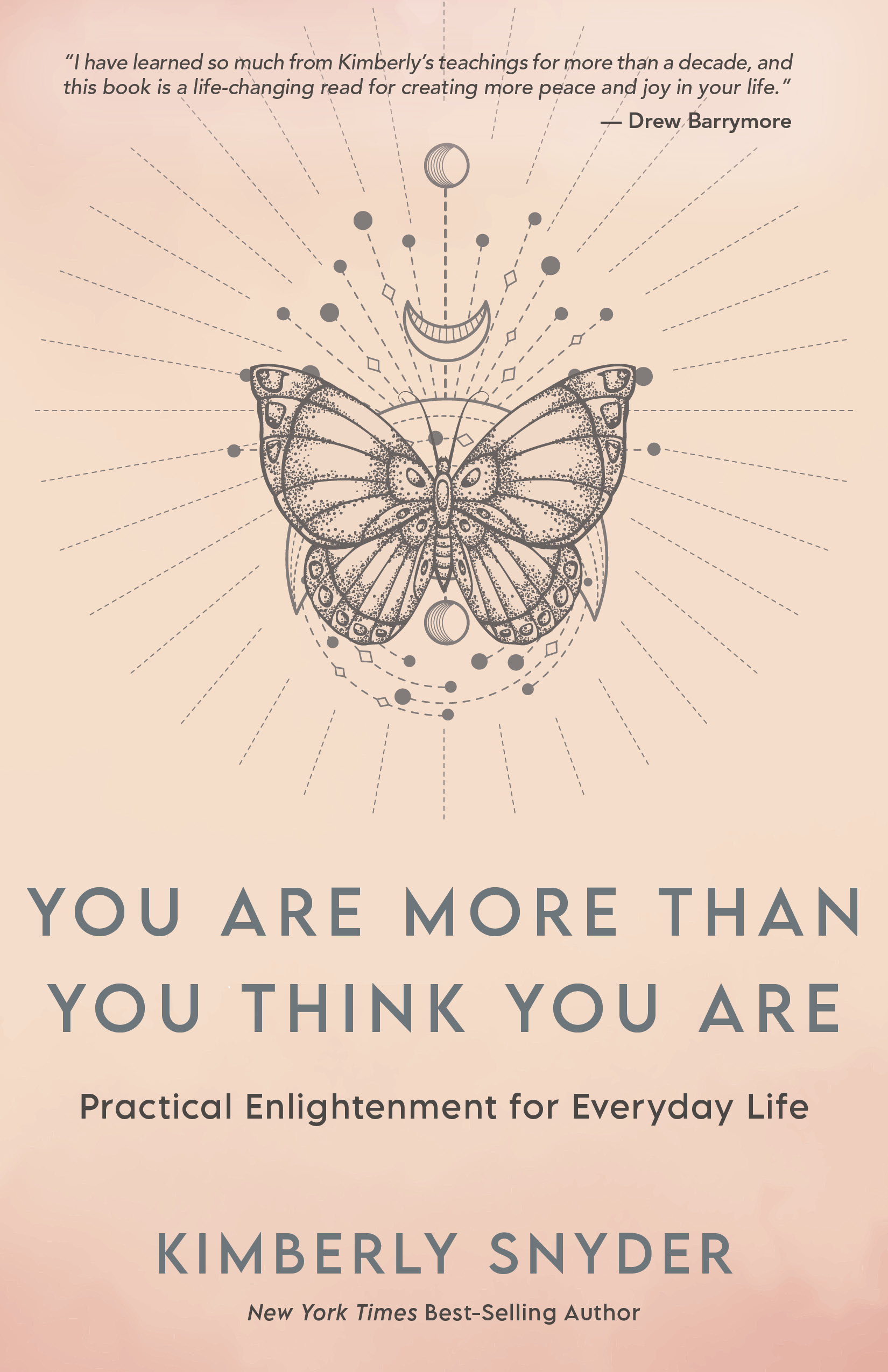
- You Are More Than You Think You Are
OTHER PODCASTS YOU MAY ENJOY!
- How to Believe in Your Self Worth with Jamie Kern Lima [Episode 907]
- How to Raise Your Standards In Your Love Life with Matthew Hussey [Episode 883]
- How to Eat to Beat Your Diet with New York Times best selling author Dr. William Li [Epsiode 913]
- The issues with consuming vegetable and seed oils with Dr. Catherine Shanahan [Episode #899]
- How the Power Foods Diet helps with Weight Loss with Dr. Neal Barnard [Episode #877]
- How Not to Age with New York Times best-selling author Dr. Michael Greger [Episode #873]
- How to eat to reduce anxiety with Harvard nutritional psychiatrist Dr. Uma Naidoo [Episode #867]
- How to Optimize Your Metabolic Health with Dr. Casey Means [Episode 889]
TRANSCRIPT:
Solluna By Kimberly Snyder (00:00.966)
Michael, thank you so much for joining us here today. I’m very excited to chat with you.
Michael Chad Hoeppner (00:06.36)
Thank you, it’s my pleasure.
Solluna By Kimberly Snyder (00:08.262)
Also a little bit more careful than usual, given that your book, don’t say how to communicate effectively to live a better life, is about communication.
Michael Chad Hoeppner (00:21.078)
You know, one of the unintended consequences of this book is that without even meaning to, I’ve made everyone who talks to me tremendously nervous, because they’re thinking like, my gosh, he’s watching my every move. And I joke with my wife where she’ll say like, can you just turn off the communication lens for a second? Because I just want to have an argument. I just want to a discussion, right? I just want to have a nice conversation, you know? But I promise you.
I am not interested in being the um-police. And in fact, in the very first page of the book, I joke that the title is a little bit of a trick because don’t say is a classic example of thought suppression. As soon as you say don’t say all you’re thinking about is So the point of the book is really how do you escape those sorts of thought suppression traps and instead focus on things that you can do to be better. So.
Solluna By Kimberly Snyder (00:58.161)
Right.
Michael Chad Hoeppner (01:10.744)
far from me watching every single thing you’re doing like a hawk. No, I’m excited to have this conversation and get into what are things that people can do to be even better.
Solluna By Kimberly Snyder (01:10.834)
Yeah.
Solluna By Kimberly Snyder (01:18.79)
Yes.
You know, I feel like communication is something that we don’t discuss enough openly, especially in today’s world where texting and these ways in which we communicate a lot can just be very snippy and careless a bit. And one may ask, well, why are you guys talking about communication on a wellness show? And for me, the way I see it, and I’d love to hear your perspective, Michael, with working in this field for so long.
I know when I communicate effectively, it fosters closeness and two of our cornerstones, two of our pillars are emotional well-being, spiritual growth, and then food and body. So I know for me, the more I express, the more close I feel, the more I feel full as a human and connected.
Michael Chad Hoeppner (02:15.352)
Where do you want me to start on this? I mean, I think one of the great unexamined aspects of communication is that it is in fact a health and wellness intervention in our day, if we do it well. And let me just piggyback on what you said. I’m not even talking about emotionally, it feels good to connect with others. It feels bad to be stuck in like hostility when you process that, it feels better. I’m not even talking about that.
talking about really simple things, mechanical things. In order to speak, you have to move.
Solluna By Kimberly Snyder (02:45.275)
Yes.
Michael Chad Hoeppner (02:49.73)
Your diaphragm drops down, your lungs fill with air. In order to speak effectively, you’re better off having tall posture so there’s room for your diaphragm to move down, your lungs to fill with air. To speak well is actually a tiny way of moving your body in a dynamic coordinated way. It’s like a little tiny bit of exercise each day. You could think of it that way. But even building one more thing about your point about devices.
Solluna By Kimberly Snyder (03:11.75)
Yes.
Michael Chad Hoeppner (03:17.078)
I mean, goodness gracious, think of how much the time we’re on screens versus being in some sort of dialogue with another human and we’re called the social primate for a reason. We need that communication. So thank you for bringing this idea of health to this topic.
Solluna By Kimberly Snyder (03:34.608)
You mentioned in the book, content is what we’re saying, but delivery is everything. So whether we’re in an angry space or we’re wanting to get hired for a job or we’re wanting to connect with a friend, the ways in which we deliver have a tremendous impact on our quality of life. Can you go into that for a moment?
Michael Chad Hoeppner (04:00.014)
Sure. Well, I’ll put it to an example about devices, because you just asked about the text and things like that. Here’s a perfect proof point, OK? If you’ve ever misread the emotional intent of a friend’s text message, that’s because you misheard their delivery. You thought they were saying like, call me back. And really, they were saying like, call me back.
Solluna By Kimberly Snyder (04:21.99)
Right.
Michael Chad Hoeppner (04:30.005)
So that’s like a very concrete example of how delivery matters so very much. And a lot of how we deliver things, it indicates our EQ.
Solluna By Kimberly Snyder (04:40.178)
Right, right. Now you talk about linguistic precision. And I start since reading your book, I start to notice hmm, I do say the word like more than I perhaps would like like to. And there are these little words which seem to dilute this power. You have all these different exercises in the book, which I find really interesting.
Can you give us a little clue or a little exercise or some insight into how one would start to cut back on those filler words since it’s so common?
Michael Chad Hoeppner (05:18.455)
Sure.
You’ve read the book, which I appreciate. Thank you. You’d be surprised at how many folks interview me and have not read the book. So first of all, thank you for that.
Solluna By Kimberly Snyder (05:27.886)
no, I read the, it’s fascinating book by the way.
Michael Chad Hoeppner (05:31.791)
Thank you. Thank you. So I’m going to teach you an exercise that you already know, but your listeners might adore this exercise because on the one hand, it helps with a question you asked about, is like synoms and you knows, but take it in a different, different lens. also can be an amazing way to anchor into a sense of purpose or to set an intention or to really
just dive into mindfulness, the exercise is called finger walking. And it’s exactly like the title sounds. All you do is you walk your fingers across the table or desk, choosing each and every single word that comes out of your mouth. Now, I’m actually doing this right now, if you’re just listening to the episode, if you’re watching, you’re seeing it, of course, but you use your fingers as a kinesthetic device.
Solluna By Kimberly Snyder (06:17.744)
Mm-hmm.
Solluna By Kimberly Snyder (06:29.681)
Mmm.
Michael Chad Hoeppner (06:29.698)
to force yourself to choose words, not just open your mouth and see what words tumble out. If you don’t know what to say next, you have to pause your fingers until you have figured out what words you want to choose. And if you struggle with this activity, the problem is not in your brain, it’s not even in your mouth. It’s that you weren’t precise enough with your fingers. Think of it almost like a ballerina trying to walk through a field of tulips.
without disturbing a single flower. Now I coach that with clients so that they can help eliminate those useless cluttered words that you’re talking about. But you could also imagine setting an intention for the day and walking your fingers across the desk, choosing each word, seeing how much energy you can dedicate to really choosing each word and therefore being incredibly concrete about the day’s goals.
Solluna By Kimberly Snyder (07:27.78)
I love the physicality of what you teach. And there was another exercise involving blocks or Legos, which we have a lot of Legos having a five year olds and a nine, two, two boys, five and nine. And it’s this, I think it was for pausing intentionally instead of just, you know, going on and on and rambling. So there’s a really, most of us don’t think of communication as having this really solid physicality.
Michael Chad Hoeppner (07:40.269)
Yeah.
Solluna By Kimberly Snyder (07:57.882)
And it makes me think of the spiritual concept of embodiment, where we’re embodying the energy of the words and we’re not sort of fritting our energy away. Can you talk a little bit more about that?
Michael Chad Hoeppner (08:09.71)
really glad you brought up the word embodied because the fancy phrase for all of the exercises in this book is embodied cognition. So, know, cognition, thinking or learning embodied using the body. It’s using your body to learn better communication practices.
Solluna By Kimberly Snyder (08:19.538)
Mm.
Michael Chad Hoeppner (08:30.51)
and the Lego block exercise. As a funny aside, by the way, I relate to your Lego point. I’ve been running this company now for, you know, more than a decade and a half. I started it in 2010. So for the first five years of running the company, I did not have kids. And I had my first child, my daughter in 2015. So up until that point, I had to order Legos to have for clients.
All of a kids come along and the house is littered with Legos. So now if I need it for a client, I just go and raid their toy chest, raid their Lego chest. Anyway, back to the point of the exercise. The way it works is as follows. You stack a Lego block at the end of every single idea. You can almost think of the Lego block as a period at the end of the sentence. So you pick up a Lego block, you say one idea or one sentence, and at the end of the sentence, you
Solluna By Kimberly Snyder (08:55.609)
wow.
Solluna By Kimberly Snyder (09:18.8)
Right.
Michael Chad Hoeppner (09:24.782)
put it down in silence. Then you pick up the second Lego block, say the second idea at the end of that idea, kind of like the period at the end in silence, you click it in place on the previous. And third, and so on and so forth, building your communication.
Solluna By Kimberly Snyder (09:44.412)
Brilliant. Well, Michael, even as we’re talking, I’m aware that I naturally insert, yeah, right. Agreeing. Would you consider that filler? Would you say, hey, you and I are looking at each other right now and that’s enough? Versus, I feel like I do that a lot and maybe many of us do that a lot in listening. You talk about how communication is really being engaged and focused.
on the other party, nodding, but sometimes these little words, yes, got it. What do you think of those words?
Michael Chad Hoeppner (10:21.91)
Yeah, I’ll put it this way. In the chapter on filler, I give two incredibly intuitive criteria for what filler is. And the first is, it’s not grammatically necessary. And the second is that you’re not aware you’re doing it. Jokingly, I one time worked with a client who used the word viscerally as a filler.
He would put the word viscerally into practically every sentence. Yeah, completely unnecessary and so random. So for him, the word viscerally was actually a filler, yes. But a lot of those words, like, as an example, it can be used in a way that is grammatically necessary. I feel like a piece of wood adrift in the sea. the word like is used in that situation as a symbol. Yeah.
Solluna By Kimberly Snyder (11:16.4)
Sure. But anymore like this. Sure. Wow, you’re talking these words to emphasize that I’m in agreement or I’m really listening to you. What do you think of those words?
Michael Chad Hoeppner (11:18.242)
but often that’s jammed in.
Michael Chad Hoeppner (11:30.886)
I get it because what I would call those would be corroboration sounds, like you’re corroborating for me that you’re attentive. And I will put the same lens on it, which is if you’re not aware you’re doing it whatsoever, and it’s not actually necessary, it’s not helping the other person, it might be worth considering are there different ways to show and to indicate that I’m being attentive? But for most people, they’re probably not a problem. They’re probably a good thing, not a bad thing.
Solluna By Kimberly Snyder (11:36.752)
Yes.
Michael Chad Hoeppner (12:00.224)
And to give everyone listening a little bit of a relief with this, the goal, and when I teach classes on presence around the world, the goal is not that you should have this kind of presence and you should make an mm-hmm sound every 75 seconds because that’s the ideal. The goal is it presence is you. It’s not me, it’s not somebody else, it’s not some universal normative ideal.
Presence is you, but ironically, you, when you’re thinking the very least about you and your presence, when you’re thinking the most about reaching the other person. And that’s why I think that the idea of this book can be so liberating and so fulfilling for the very topics that you speak about all the time, this idea being focused on mission, purpose, something bigger than oneself. Communication is a manifestation of that.
Solluna By Kimberly Snyder (12:58.66)
It’s also, there’s a spiritual angle that I kept coming back to when I was reading your book and putting attention on another. There’s this yogic, Vedic concept of oneness beyond the ego, beyond the little self, and it’s how we expand. And as you said, how funny when we’re least thinking about ourselves and we’re expansive, then there’s real presence. There’s an energy that comes in and then true connection can really be forged.
Michael Chad Hoeppner (13:28.247)
That’s right. And what I would offer and submit is that when you’re at your very best, and I mean this both about you, but I mean about everyone listening. When you’re at your very best, really connected to the other person, really listening, whatever ratio of mm-hmms and yes and rights that you say is right for you. And when they go wrong is when all of a sudden you tip into self-consciousness and
Solluna By Kimberly Snyder (13:51.026)
Mm.
Michael Chad Hoeppner (13:58.2)
feeling inadequate and insecure and you’re trying to almost overdo it, or rather you’re multitasking and you’re not really listening to the other person. You’re just kind of, mm-hmm, mm-hmm, mm-hmm, uh-huh, mm-hmm, mm-hmm, mm-hmm.
Solluna By Kimberly Snyder (14:10.212)
Right? You can feel when someone’s doing that.
Michael Chad Hoeppner (14:13.057)
Yes. So as opposed to fixating on how should I or shouldn’t I or how many or how few, instead, fixate on really trying to reach the other person and trusting that if you do that, all of what I call the behaviors of presence will unlock automatically.
Solluna By Kimberly Snyder (14:31.59)
Michael, how did you even get into this work and how did this become your focus, communication?
Michael Chad Hoeppner (14:37.995)
Yeah, I come at it from a professional acting background originally, but the work went in a very different direction when I started the company in 2010, because I began to experiment with exactly what we’re talking about today, embodied tools, kinesthetic tools to teach people the fundamental building blocks of speaking, like pausing, like choosing words.
like using their voices and their bodies to set an intention or to reach someone across the room. And so I began coaching people to stack Lego blocks or to throw a wiffle ball or to speak with an impediment in between their teeth. And what happened is that people got much, much better very quickly. And by 2014, I was teaching at Columbia Business School and 2016 offering some feedback on presidential politics. And I don’t suggest that that
of track to brag about me. I mention it because no one was doing this. No one was thinking about communication from a deeply kinesthetic approach. And I still think there’s a lot to be gained from this kind of approach. And I really hope that your listeners, if they take nothing away from this conversation besides this, I am a communication athlete. I
am a communication instrument. And if I use my body in different ways, I can dramatically alter my communication. So anyway, that’s kind of how I got into it also why I still am very committed and very passionate about it today 15 years later.
Solluna By Kimberly Snyder (16:05.138)
Mm.
Solluna By Kimberly Snyder (16:18.514)
There’s an interesting part in the book where you talk about confidence, which seems to come up a lot in our community. We get a lot of questions and comments about wanting to feel more confident. you know, for many people, there’s so many different ways to achieve that. Sometimes it’s this external focus, which can lead to even a hyper fixation on the body. Sometimes it’s wanting to achieve more.
You say something in the book and I’m paraphrasing, of course, that you don’t have to feel confident to project confidence. Is this sort of like the fake it till you make it idea? Tell us your view of confidence and how communication can play a part.
Michael Chad Hoeppner (17:05.291)
Yeah, this is a huge topic. So you have to promise to interrupt me midstream if I go on too long on this one, because we could do a whole podcast on this one question. OK. First of all, you are not paraphrasing. You actually quoted from the book brilliantly. That’s exactly what I say in the book. And to be very clear to your listeners, I’m not suggesting that confidence is not a great feeling. It is. And I’m also not suggesting that confidence isn’t relevant in many aspects of our life.
Solluna By Kimberly Snyder (17:10.898)
Okay.
Michael Chad Hoeppner (17:33.292)
What I’m trying to do is liberate people from a confidence trap that affects their communication. Confidence trap with communication is essentially when I feel confident, I speak well. When I don’t feel confident, I fail. And what happens is that people chase the feeling of confidence. And the more they chase the feeling of confidence, often the more ephemeral it is. And then,
Solluna By Kimberly Snyder (17:40.57)
Okay.
Solluna By Kimberly Snyder (18:01.49)
Sure.
Michael Chad Hoeppner (18:02.219)
they begin to blame themselves and fall into self-critique and even like shame and things like that. And I have found in almost two decades now of doing this with everyone from presidential candidates to high school students, the much faster and the much more fun route, by the way, to become much better at speaking is to embrace this idea of I’m going to learn to do the behaviors.
that allow me to communicate really, really well and I’m not gonna obsess about my feelings of confidence a little bit. So in a way, to get back to your question on the fake it till you make it, in a way it’s related, but it’s not the same thing. What I’m suggesting is if you focus on these behaviors, not only will you come across better, but they may in fact actually help you say smarter stuff. And it may in fact ultimately change how you feel.
Solluna By Kimberly Snyder (18:34.812)
Hmm.
Michael Chad Hoeppner (18:59.405)
Two, take the finger walking activity. just taught a couple of minutes ago. Let’s say you practice doing that on remote calls. Instead of just opening your mouth and speaking at forwards per second as fast as you possibly can to show that you know everything, but also getting tongue-tied and getting stuck and then forgetting to breathe and feeling nervous. Did that pretty quickly, obviously. If instead on those calls, you practice using this finger walking exercise. One, you’re going to say much more specific, accurate, articulate stuff.
two, because you’re speaking more slowly, as unlocked using embodied cognition, you’re going to have more time to actually think of what you want to say and maybe even breathe. And those things might unlock greater confidence.
Solluna By Kimberly Snyder (19:47.61)
I can’t help but go back to how your book is, I see the word accidentally spiritual. My last book, Michael, was about heart coherence. So the energetic, the physical heart. And there is another line that you talk about not paying so much attention to your emotions and thoughts, but rather this physicality. And we could say that in a lot of, you know,
meditative mind, I really like the word mindfulness, could say, heart based consciousness raising techniques where thoughts are based on perception and our perceptions can shift greatly depending on the state of our nervous system. Am I right? And then our emotions are fleeting and sometimes we identify with them. And of course that would affect how you come across, you’re communicating. So I really liked how you just kept bringing it back to
posture, physicality, breathing, which I want to talk about next, because there’s a steadiness in that. And it gives us something to focus on beyond these thoughts, which can really lead us astray.
Michael Chad Hoeppner (20:56.823)
There’s a reason that yoga fixates on these very specific moves and poses. And you don’t go into a yoga practice trying to feel confident or trying to think of all the important things in your life. You simply do these very regimented, very powerful flow. And that unlocks, yeah, and that unlocks a lot of really great, you know, positive knock on effect. So,
Solluna By Kimberly Snyder (21:18.162)
for the Oscar. Yes.
Michael Chad Hoeppner (21:25.759)
I’m quite flattered actually that you’re talking about the accidental spirituality in this book. I think it maps very straight ahead. And I’ll tell you why. All the great religious traditions feature something about focusing on the other, not the self, not fixating on the self, focusing on the other, offering, do unto others, these sorts of things. And communication is the human superpower
Solluna By Kimberly Snyder (21:46.16)
Correct.
Michael Chad Hoeppner (21:55.276)
to do that, you this massive vocabulary so that we can focus on and reach and help the other person. So if really practiced well, communication can even be a spiritual daily practice of being other focused. So I take it as a compliment. Now, it doesn’t seem like, I don’t feel like you’re shoehorning this into the discussion whatsoever. I think there’s a lot of alignment there.
Solluna By Kimberly Snyder (22:08.722)
Mm.
Solluna By Kimberly Snyder (22:13.691)
I love it.
Solluna By Kimberly Snyder (22:21.98)
There is, and I was not looking for it, to be honest, and it came across organically as I was reading. So, new confidence, we talked about that, and there’s this section in the book where there’s kids’ faces, and it made me laugh a little bit. I believe it was this section where you’re talking about having a greater range of ourselves instead of monotony that we can sometimes fall into for different reasons. And I think you said something about trying to get into an eye contact.
contest with my five year old. I think about my five year old or my nine year old is so convincing and he’ll do all sorts of things. Can you talk about range and what it means and why it’s important to cultivate again as adults if perhaps we have lost it?
Michael Chad Hoeppner (23:09.409)
Yeah, we come into this world and the first thing we do is we breathe and then we scream. So communication is ultimately the very first thing when we enter planet Earth or planet Earth’s atmosphere, however you would say it.
we tend to as kids have a tremendous amount of range. First of all, the human voice naturally has this massive range. If you don’t believe me, just think of a kid crying and screaming, a little baby is huge range. And also kids, because they’re resourceful, because they’re resourceful humans, they learn lots of different tactics to try to get what they want. But then we get put into society.
and professional situations and we get taught to constrain all of that and be more professional and I’m putting professional in air quotes. What it typically means for most people is just be a deeply reduced version of yourself. I’m not talking about bring one’s whole self to work. I’m actually talking about something much more fundamental which is literally how much you breathe.
Solluna By Kimberly Snyder (24:11.41)
Mm.
Michael Chad Hoeppner (24:22.135)
how much musicality you do or do not have in your voice, how much you move your face, how much you move your hands, how forcefully and dynamically you articulate your words. And yeah.
Solluna By Kimberly Snyder (24:33.543)
Can you pause for a second, Michael? You said musicality. What do you mean by that?
Michael Chad Hoeppner (24:38.155)
Yeah, well, in the chapter on vocal variety, I talk about the musicality of our voices. This means not the words, it means the sounds of the words. And in that chapter, I anchor musicality to vocal variety and in fact to five P’s pace, pitch, pause, power and placement.
Solluna By Kimberly Snyder (25:05.2)
Mmm.
Michael Chad Hoeppner (25:05.737)
Ace is speed, so that’s fast and slow. Pitch is high and low, so like musical note up or down. Pause is silence, that’s what that Lego block activity you asked me about, that’s what that unlocks. Power is another word for volume, loud and quiet. And then placement means where the sound primarily is placed within the body.
Solluna By Kimberly Snyder (25:12.338)
Thank
Michael Chad Hoeppner (25:34.337)
back to this concept you and I are talking about of embodied embodiment and embodied cognition. Your sound in your body resonates differently in different parts of your body. When you have a cold and your nose is all stuffed up, your voice sounds different because you’ve altered how the sound can amplify in your sinus passages or not. So that’s the fifth P placement. And in the chapter I talked about some research that we looked at, I did with some other academics around the country.
And we looked at politicians and those who used these five Ps to speak were better evaluated by their audiences, more authentic, more real, more dominant, more competent, all kinds of good stuff.
Solluna By Kimberly Snyder (26:21.49)
When you were doing that, Michael, which is very interesting, by the way, I can recall people, maybe we all can recall people who, women in particular, have very high voices and it’s all the time. Do you think we can manipulate our voices in all communication? And you talk about habits and reinforcing them, learning these patterns.
Do you have you seen people, I’ll phrase it this way, that have been in a certain tone for whatever reason, and then through unlocking more communication range and expression, literally their voice drops down and they change. Because sometimes you think, is that person, is that their real voice? Were they born with a voice that high? And I’m sure people have that natural voice, but some people, almost feels like they’re creating it.
Michael Chad Hoeppner (27:15.405)
I have only seen the dynamic that you’re talking about every day that ends in the letter Y.
Okay. Yeah. And by that, I mean that in the chapter on this, talk about, it’s total misnomer how we speak about our voices. People say like, I hate the sound of my voice. I have a blank voice. I’m scratchy, shrill, annoying, whatever it is. And then what I write right after is like, you don’t have a voice. Well.
Solluna By Kimberly Snyder (27:25.414)
Well put, well put, okay.
Michael Chad Hoeppner (27:52.747)
That’s not true. You do have a voice. But I try to be pretty provocative with my language and point out you don’t have a voice as in like your voice. You create sound. You create, you turn air into sound and then shape that sound into words. And depending on how you’re using your body, your voice changes and changes dramatically. And it’s not even just like a lifetime from shrill to not shrill.
Solluna By Kimberly Snyder (28:06.608)
Right.
Michael Chad Hoeppner (28:21.152)
Think of this, your voice sounds different when you wake up from a long nap and you’re kind of groggy. Sounds different after maybe a glass of wine if you’re having an evening conversation. Sounds different after exercising because you are a musical instrument. Takes more than 120 muscles to do this everyday miracle of turning air into sound and then sound into words. And your voice sounds different depending on how you use your body.
So yeah, if people use their bodies differently, their voice changes and changes dramatically. So yes to your question.
Solluna By Kimberly Snyder (28:59.122)
For listeners that have been hearing me do this podcast for a while or new listeners, just sort of this real time role play, you give us an experience, how you work with people. What would you say or there are any tips you would say about my voice? And I won’t take offense, of course, like I’m very interested in how you can hone in.
Michael Chad Hoeppner (29:22.092)
Sure. Okay. Now to be clear, hey audience, everybody listening, is a fun thing because we did not exchange questions in advance. Kimberly did not send me a whole bunch of questions. I generally know what people are gonna ask because I wrote the darn book, okay? But this one is completely unscripted. We’re just shooting from the hip with this as are all these questions, but I’ll put it right back to you. How direct and how…
Solluna By Kimberly Snyder (29:23.986)
You’re like, where do I start?
Michael Chad Hoeppner (29:50.806)
how straightforward you want me to be with my feedback.
Solluna By Kimberly Snyder (29:55.31)
I’d love to hear how you would work with a client.
Michael Chad Hoeppner (29:59.703)
Sure, with you though or just any client?
Solluna By Kimberly Snyder (30:04.452)
I mean, how you go again, I look at a new client coming to you. say, Hey, this is part of my work. love having a podcast. also do quite a bit of speaking and daily conversations. I would like to improve just like all of us listening to this. Even if, yeah.
Michael Chad Hoeppner (30:27.092)
Yeah. So I’m going to give you a bunch of compliments then. Please don’t let it go to your head and then I’ll give you a couple thoughts too. In general, I think your communication is an extraordinary asset. So why do I say that? One, you read the book. Two, you ask very, very intelligent, specific questions about the book.
Solluna By Kimberly Snyder (30:33.274)
Okay. Yes.
Michael Chad Hoeppner (30:49.898)
but not just to make the author feel good. You ask questions that hopefully help your listeners gain something from this time they’re investing in this podcast. So you’re showing tremendous other focus, both with your attention on me and your intention on your audience. Opposite of the question you asked me earlier, you demonstrate tremendous listening too. You do have these sort of corroboration sounds used from time to time. Physically, you’re responding to me all the time.
You’re also quite self-aware because at the very beginning you were able to say with full transparency, total lack of defensiveness, I’m feeling very self-conscious about this right now because I’m talking to a communication expert, but you did not let the self-consciousness of that prevent you from having the conversation. Self-consciousness gone too far really just becomes selfishness in a way. Because your audience doesn’t actually care if you’re nervous. They just care.
Solluna By Kimberly Snyder (31:26.738)
you
Solluna By Kimberly Snyder (31:43.026)
Mmm.
Michael Chad Hoeppner (31:47.723)
Am I getting something out of this conversation or not? So these are some of the tremendous strengths you bring to the table. Beyond that, your enunciation is perfectly adequate. Adequate sounds like I’m being insulting, I’m not. What I mean is, there’s no word that you’ve said in anywhere in this podcast that I had a difficult time understanding because of lack of enunciation. That’s a strength.
Physically, this is probably a lot of the work you’ve done on wellness anyway. If you look at your posture, your head is more or less like a helium balloon floating up off the long string of your spine. Your eyes are pretty much anchored in the middle of your head, so you’re not like craning your neck back like so. From what I can tell, I can’t really see your diaphragm and your lower part of your torso, but it looks as though you’re breathing and your voice sounds like you’re breathing.
So a bunch of these boxes would just be like, check, check, check, check, check, check. Then of course, everyone’s listening for, well, where’s the butt, Michael? What are we gonna get to next? Yeah, yeah. So the place that would put your attention would actually be on these same five Ps, pace, pitch, pause, power, placement. And the reason I would bring your attention there is because you speak with a tremendous.
Solluna By Kimberly Snyder (32:45.744)
We’re getting to the good stuff.
Michael Chad Hoeppner (33:04.886)
facility in terms of choosing words, demonstrating patience, demonstrating listening. I mean, I’ve even noticed talking to you that because of the way in which you speak and because humans are reciprocal, my instinct has been to actually slow my rate of speech, dial back some of the sort of five Pisa vocal variety I might use to try to engage an audience to meet the kind of energy that you’re using.
But any vocal variety pattern taken too far becomes constancy. Constancy, I’ll do constancy so you can hear it right now. Constancy would technically be that you never deviated any of the five P’s no matter what it is. You don’t sound like that, okay? And in fact, if you just listen to that, that was probably hard to even decipher what the heck I was saying.
Solluna By Kimberly Snyder (33:42.798)
Mm-hmm.
Solluna By Kimberly Snyder (34:02.844)
Robotic.
Michael Chad Hoeppner (34:03.838)
Yeah, robotic, because you’re speaking in absolute uniformity. So what this means is that if you have a strong impulse, you probably could afford to allow words to stream out of your mouth even more quickly at times. You could probably afford to use even more volume to reach your audience at times, not because you speak too softly or you speak too slowly. No, because we as humans use these five P’s.
Solluna By Kimberly Snyder (34:18.482)
Yeah
Michael Chad Hoeppner (34:32.908)
to reach each other. They can go too far, by the way. You can go from constancy, past coherence, all the way into chaos, like bad AI software in which the thing sounds like that and we don’t know what we’re hearing. It can be too much, right? But there’s no world in which most people ever get to that category of chaos. So you could experiment with what is it like actually to allow
Solluna By Kimberly Snyder (34:42.287)
Right.
Michael Chad Hoeppner (35:00.338)
more energy, even though I’m working on like mindfulness, intentionality, physical bearing, you could experiment with what happens if I allow more of those five Ps to be included in my speech.
Solluna By Kimberly Snyder (35:14.802)
love that. Thank you so much, Michael. That’s really insightful, obviously, and interesting. And I agree, I meditate a lot, I do a lot of these heart practices. So I feel like I’m generally in a certain frequency. But to your point, I could still be calm and loving and all the ways in which I want to be in the world, but it can be a little more. It sounds more to even do higher or faster paced at times which
you know, there’s no reason that that energy can’t be worked with and still consistent.
Michael Chad Hoeppner (35:49.259)
Yes, and here’s the totally liberating thing for you, for me, for everyone listening. You know how to do this already, I promise you. I want you to imagine this thought experiment, okay? And it’s in the book, so you know probably where I’m going with this, but still indulge me and let’s do this thought experiment. A dear friend of yours comes to you and they’re in a genuine crisis.
Solluna By Kimberly Snyder (35:56.433)
Bye!
Michael Chad Hoeppner (36:11.05)
you know, considering bailing on their career and doing something radical, gonna leave their loved one, gonna do some rash decision, whatever it is, okay? They’re in some kind of crisis and they come to you for some help and you speak with them for a while and what you’re trying to do, whether you’re even aware you’re doing it or not,
What you’re trying to do is help them find some peace and some serenity so they can make a better decision. And you’re so partially by trying to indicate and exude to them that kind of energy. But let’s say it’s not working, okay? It’s not working at all. At a certain point, you would probably give up and change entirely. And then you would say like, whoa, stop, hang on, wait, time out. Let’s get up, come on, let’s go for a walk. We’re gonna talk this out.
Solluna By Kimberly Snyder (36:36.816)
Mm-hmm.
Solluna By Kimberly Snyder (36:45.328)
Wait.
Michael Chad Hoeppner (36:57.248)
you would change tactic, not because you were trying to do different communication styles. You would change because what you were doing previously wasn’t working. And humans are resourceful. do this with five Ps all the
Solluna By Kimberly Snyder (37:09.81)
Beautiful. The way you explained it feels so organic and natural as well. Michael, I could ask you a million questions. I think this topic in your book is really fascinating. we close out, before we close out, is there one simple breathing tip perhaps or one sort of takeaway that you find in your work almost anyone, everyone could benefit from in their communication?
Michael Chad Hoeppner (37:38.335)
I do. It’s called silent storytelling. I’ve mentioned two tools already on this one, the finger walking exercise for linguistic precision, the Lego block activity for learning how to pause and structure your thoughts. But this one is perhaps the most powerful of all because it tends to get people to do what they already do in real life when they’re at their best, which is use more of themselves. Silent storytelling just means you speak but without sound.
So it’s like the exercise sound, silent storytelling. You talk on some subject matter, but you’re essentially lip syncing. You’re not allowed to make sound. You have to mouth the words. You have to allow your face to be as active as possible to indicate what you’re thinking. You have to let your hands get in on the story too, because they have a story to tell as well. And you use all of your physical and vocal communication instrument.
Solluna By Kimberly Snyder (38:08.113)
Mm-hmm.
Michael Chad Hoeppner (38:37.568)
but mouthing words the whole time. So almost like you’re a very energized version of yourself that’s been put on mute on television. Do that for a few minutes and then guess what? Put sound back into the equation and allow sound to come back in your voice and what you will find out is first, wow, my voice sounds completely different. But number two, I’m using so much more of myself than I typically do. And this might even feel more like how you actually talk in real life.
Solluna By Kimberly Snyder (38:46.652)
Wow.
Michael Chad Hoeppner (39:06.08)
than how you have learned to talk in the various professional narratives that we live in in our life.
Solluna By Kimberly Snyder (39:11.792)
Wow, that’s an amazing exercise that I did read about and I will try. I read through and the Lego one stood out and now taking time to actually do the practices like you said will really bring this to life. And you also say in the book, a lot of people don’t do exercises in books and it’s sort of silly. Why wouldn’t we want to benefit from the wisdom that we’re learning? So Michael, this is all so interesting. Tell us.
where we can find out more about you, of course, where we can get the book. And even if someone’s maybe interested in becoming a client or going even deeper in your work.
Michael Chad Hoeppner (39:50.645)
Yeah. Well, the URL for my company is very simple. It’s just GK Training. I’m the founder and head of GK Training. It’s just gktraining.com. So if folks are interested in coaching or learning more about what we do, that’s the place to go. The book you can find there, but you can also find it a very easy URL, which is don’tsayum.com. Don’tsayum.com.
And then in terms of just personal, easiest for me is LinkedIn. That’s Michael Chad Heppner at LinkedIn.
Solluna By Kimberly Snyder (40:24.078)
Wonderful. Well, thank you again so much, Michael. Really appreciate it. And there’s so many takeaways that I will be using myself. Everyone, thank you so much for tuning in. We will link directly to Michael’s site and his book and his work at mysaloon.com.
where you’ll also find links to other articles, shows, resources that we think you’ll enjoy. I will be back here in a few days. Otherwise, I’ll also see you on socials at underscore Kimberly Snyder and also on our Saluna website. Till then, take great care. Thank you so much for being part of the community and sending you all so much love.
0 Comments